
BodhiGPT | Podcasts
Generates AI-powered summaries and transcripts for podcasts to save listening time.
Are you the owner?
Claim this tool to publish updates, news and respond to users.
Sign in to claim ownership
Sign InDescription
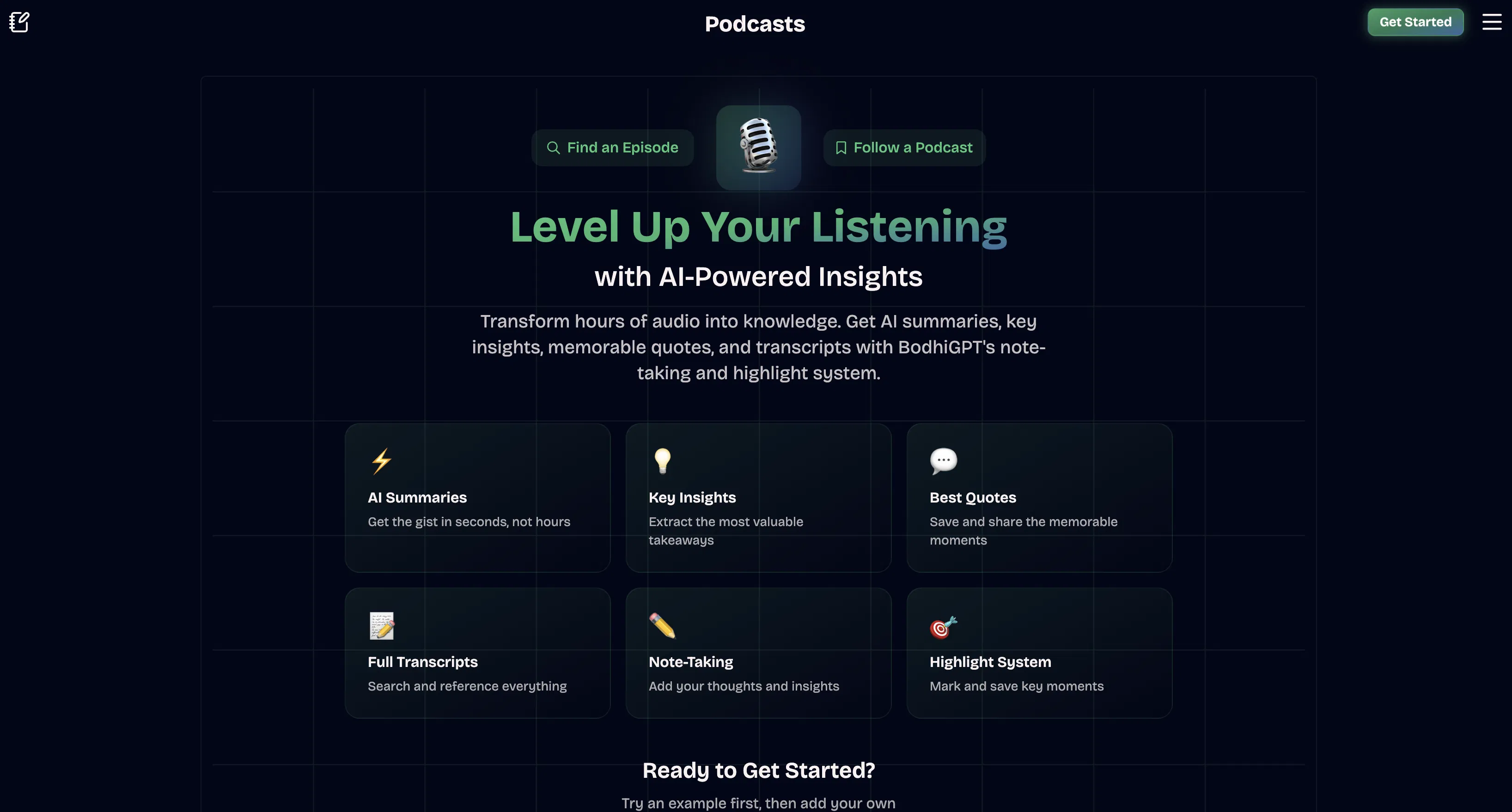
BodhiGPT Podcasts is an AI-powered tool designed to distill the core content of audio podcasts into concise, readable summaries and accurate transcripts. Created by the team behind BodhiGPT, it addresses the common challenge of information overload by allowing users to quickly grasp the key points, arguments, and insights from long-form audio discussions without committing hours to listening. Its primary value lies in dramatically increasing content consumption efficiency for professionals, researchers, and lifelong learners who rely on podcasts for knowledge but are constrained by time.
Key features: The tool can process podcast episodes from a provided URL, generating a structured summary that highlights main topics and conclusions. It produces full, searchable transcripts of the audio, enabling text-based navigation and reference. Users can ask specific questions about the podcast's content, and the AI will provide answers based on the transcript. The system also supports saving and organizing summaries into personal libraries for future review, and it can extract notable quotes or statistics mentioned during the episode.
What makes BodhiGPT Podcasts unique is its specialized focus on the podcast medium, unlike broader AI summarizers. It is built to handle the conversational, often multi-speaker nature of podcasts, effectively distinguishing between hosts and guests. The tool operates as a web application, requiring no software installation, and works with publicly available podcast episodes from major platforms. While it leverages advanced large language models for comprehension and generation, its interface is streamlined for a single, clear purpose: turning hours of audio into minutes of reading.
Ideal for busy professionals who want to stay informed on industry trends covered in niche podcasts but lack the time to listen to every episode. It is equally valuable for students and academics researching a topic who need to survey a large volume of podcast material quickly, identifying relevant episodes for deeper engagement. Content creators and journalists can use it to efficiently gather information or quotes from interview-based podcasts. Finally, it serves casual listeners who want to preview an episode's content before deciding to listen to it in full.